

The seventh round of US-mediated negotiations between Lebanese and Israeli delegations began this week in Rome, coinciding with a fresh military escalation in southern Lebanon.
Delegations from both countries opened talks in the Italian capital with high-level representation, including Lebanese ambassadors and experts alongside Israeli political and military officials. The discussions occur against a backdrop of resumed fighting in southern Lebanon and new Israeli military orders affecting civilian populations in the border region.
The agenda focuses partly on expanding pilot zone operations, an arrangement under which the Israeli army has carried out limited-scale activities in designated areas. Recent pilot zones have encompassed the towns of Froun, Srifa, and Zawtar el-Gharbiyyeh, where the Lebanese army is said to be presenting maps and documents detailing its military deployment.
Bint Jbeil and Khiam are reportedly under consideration as sites for new pilot zone operations, though the scope of any expansion depends on the outcome of the Rome negotiations and the trajectory of military activity in the region. The Lebanese delegation's positions on these locations remain tied to the broader shape of an eventual agreement.
On Wednesday, the Israeli army issued its first forced displacement order since negotiations began, directing residents of the village of al-Mansouri to relocate 1,000 metres north. The order came despite the parallel diplomatic process and signals a continuation of military pressure in the area.
Israeli military operations have intensified over recent weeks. Shelling has struck al-Mansouri, houses in Zawtar el-Sharqiyyeh have been demolished, and drone and air strikes have targeted multiple locations across the south. These operations have occurred in areas under discussion in the Rome talks.
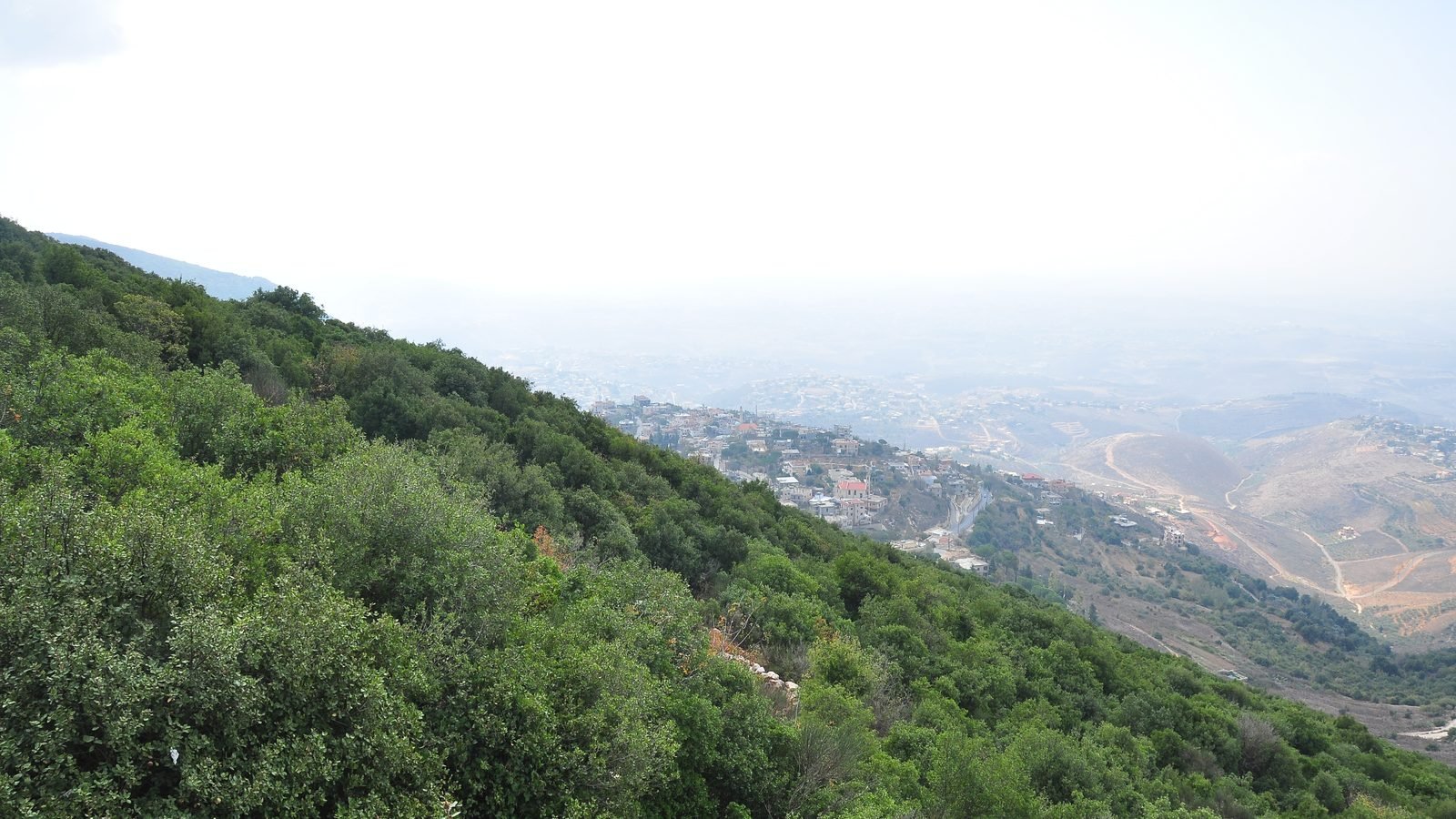
Reports indicate Israeli forces have used fire to destroy vegetation in the village of Yaroun in the Bint Jbeil district, resulting in approximately 120 hectares of burned olive and pine groves. The practice of setting fires to agricultural land raises questions about methods being employed in the conflict.
Negotiations on a durable framework remain complicated by broader regional politics. Israeli conduct in other conflicts, particularly Gaza and the West Bank, has established a pattern that shapes Lebanese expectations about implementation. Hezbollah's position on core elements of any agreement introduces further uncertainty about what a finalised accord would contain and how it would function.
The pilot zone system itself presents structural challenges. Operations have extended into areas where Israeli forces had no prior presence, complicating verification and raising questions about whether temporary arrangements can transition into a stable long-term settlement. The success of these zones hinges on how military dynamics evolve in strategically critical parts of southern Lebanon.
Regional developments beyond the Lebanon-Israel axis could shift conditions on the ground. Escalations elsewhere in the Middle East have previously altered calculations for all parties, and the two negotiation tracks remain loosely connected rather than formally linked. The coming weeks will test whether diplomatic momentum can consolidate gains or whether military pressure will overwhelm the talks.