
Israel launched a broad assault on the Alei al-Taaher ridge system in southern Lebanon on August 15, drawing a significant reinforcement from Hezbollah as both sides position forces for what may become a major ground battle.
Israel began a large-scale assault on the Alei al-Taaher ridge system on August 15, deploying airstrikes, armoured vehicles, and attack helicopters while concentrating additional ground forces in the area. The operation marks a shift from months of low-intensity warfare in southern Lebanon, characterised by limited military operations and demolitions carried out by the Israeli army in southern villages. The scale of the offensive and the movement of reinforcements suggest preparations for a significant battle rather than a contained operation on the southern front.
Hezbollah did not treat the Israeli moves as routine military pressure. The party reinforced its positions along the Alei al-Taaher ridge and deployed units of its Radwan force to the area in anticipation of a potential widening of the Israeli attack. Both sides are now concentrating forces around a single focal point, raising the likelihood that current operations could escalate into direct ground combat.
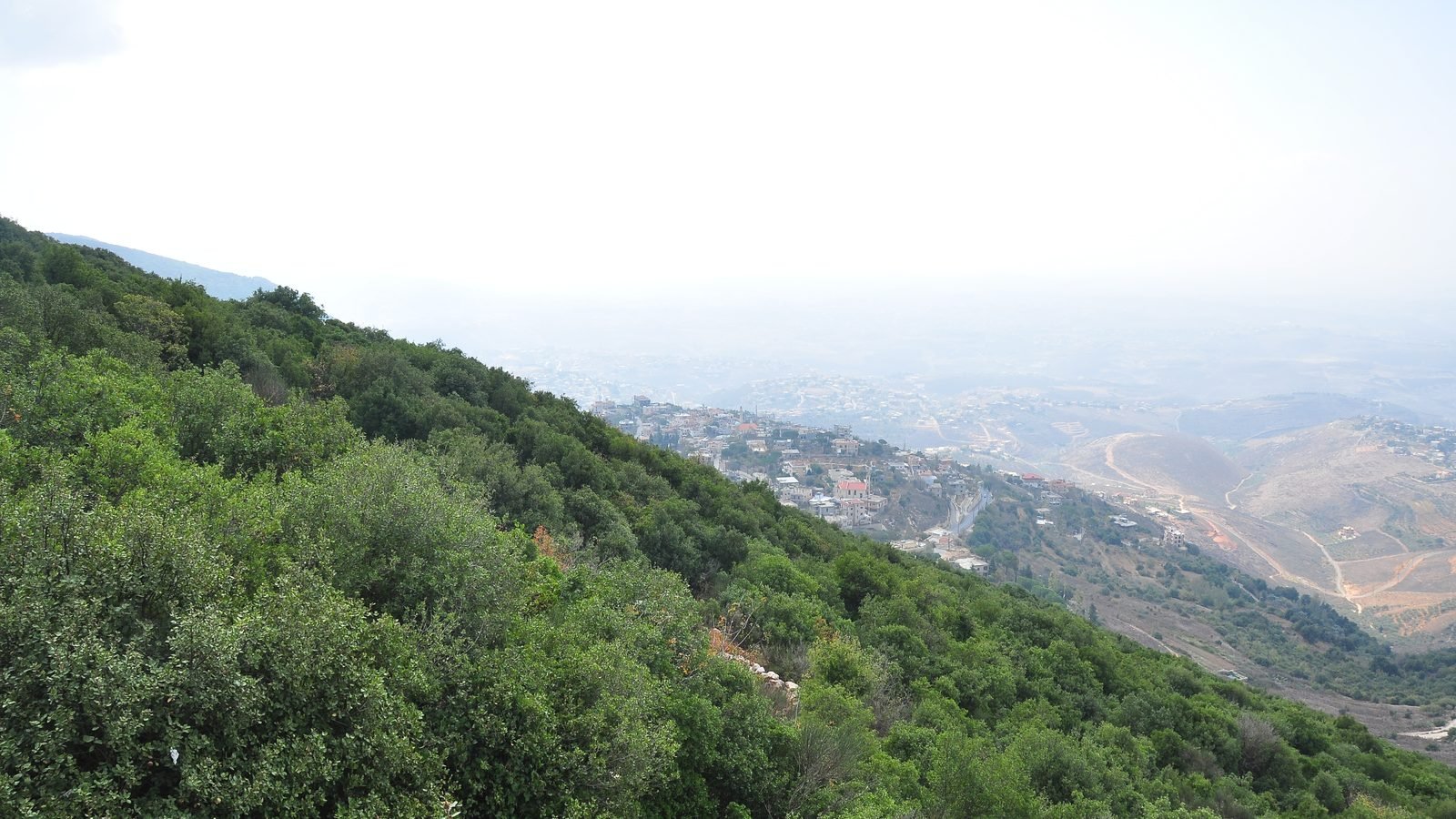
The strategic value of Alei al-Taaher extends beyond the fortifications in place there. Control of the ridge would open a military corridor toward Nabatieh and its surroundings, making it a defensive line Hezbollah considers critical to hold. The scale of reinforcements the party has sent to the area, particularly its Radwan units, reflects the importance of preventing not just the loss of a single position but the collapse of a defensive line that, if breached, would expose Nabatieh directly to further Israeli advance.
A Western diplomatic source attributed the timing of the Israeli operation to Israeli domestic political calculations. The source said Benjamin Netanyahu wants to escalate the battlefield situation before Israeli elections, betting that a major military escalation would provide additional momentum to his election campaign. Israel has selected Hezbollah's fortified complex at Alei al-Taaher as its objective, seeking to destroy it and present the operation as a major military achievement against the party.
Israel is aware that an assault on Alei al-Taaher will not be straightforward. Hezbollah anticipated for some time that the area would become a primary target for any Israeli expansion and accordingly reinforced its defences and concentrated additional forces there. With Radwan units now engaged in the confrontation, any Israeli ground advance risks becoming a war of attrition whose trajectory cannot be predicted in advance.
A source at the American embassy in Lebanon said Iran is now participating directly in decisions regarding the Alei al-Taaher front, with elements of Iran's Revolutionary Guard Corps present alongside Hezbollah fighters in the area. The source suggested the forthcoming confrontation between Iran and Israel could begin at Alei al-Taaher, transforming what appears to be an Israeli operation against Hezbollah into a new arena of direct conflict between Tehran and Tel Aviv.
The real danger emerges if the parties fail to contain the operation within its current boundaries, the embassy source continued. High-intensity battles between Hezbollah and Israel could resume after Alei al-Taaher, and if Israeli forces break the current defensive line, they may attempt to advance toward the slopes of Mount Safa and Mount Rihan, where Hezbollah maintains another defensive line. Such an outcome would represent a qualitative shift in the scope and geography of the confrontation.
A fall of Alei al-Taaher would mean more than the loss of a ridge or fortified complex. It would move the battle one step further toward Nabatieh and deeper into southern Lebanon, placing Mount Safa and Mount Rihan within the next line of contact. The breach of this position would fundamentally alter the defensive perimeter Hezbollah is attempting to maintain and the civilian areas it aims to shield from direct threat.
What began on August 15 is not a routine engagement in southern Lebanon. The Israeli army is concentrating forces, Hezbollah is deploying its Radwan units, and according to the American source, Iran is directly involved in battlefield decisions. All parties recognise the strategic weight of this ridge system and understand what its loss would entail. The battle for Alei al-Taaher has begun, and the question now is not whether Israel wants this position but how far it is prepared to go to seize it, and correspondingly, how far Hezbollah is willing to fight to prevent the fall of what it views as the gateway to the broader collapse of its southern defensive positions.