
Experts assess the extent and implications of Hezbollah's underground military infrastructure as control shifts between Israeli, Lebanese and militant forces.
The discovery of Hezbollah's extensive tunnel network across southern Lebanon has exposed not merely an armed group's military infrastructure but a fundamental breakdown in state authority, according to analysts examining the discovery. The tunnels, now being uncovered following Israeli operations and Lebanese Army advances, represent a parallel military apparatus built with apparent tolerance or complicity from Lebanon's political establishment. The revelation raises questions about how such a vast underground system could have been constructed, funded and expanded without systematic state intervention.
The full cost and extent of the network remain unknown, but the scale appears formidable. Expert Nicholas Blanford has noted that the infrastructure represents "major, major engineering works across the country" and that "it can't be cheap." The investment by Hezbollah and its Iranian backers reflects the strategic value they assign to underground military infrastructure, particularly given its utility for movement, storage and command during conflict.
Whether Lebanese authorities understood what was being built remains disputed. Blanford expressed scepticism that the state could have determined "exactly what was going on and exactly where it was going on," even if officials suspected something. The state's limited visibility into Hezbollah's activities in areas under its nominal control suggests either incapacity or indifference, a distinction with profound implications for Lebanese sovereignty.
Control of the discovered tunnels is now fragmented among three actors. Israel controls and is destroying tunnels in areas it occupies in southern Lebanon. Hezbollah retains authority over some networks, while the Lebanese Army has entered and taken control of others. This division reflects the broader collapse of unified state authority in the border region.
Journalist Tony Boulos frames the tunnels not as an isolated military project but as a symptom of Lebanon's institutional breakdown. He argues that successive governments legitimized Hezbollah's weapons through ministerial statements and political formulas, while the ruling establishment allowed the group to influence sovereign and strategic decisions in exchange for political protection and the preservation of its own patronage networks. In this reading, Hezbollah's military infrastructure was not built despite the state but because of it.
Evidence suggests Hezbollah exploited state resources to build parts of its network, particularly through the Ministry of Public Works and Transport, Boulos noted. Questions remain whether portions of the tunnel system were constructed under the cover of public projects in southern Lebanon, whose total cost is estimated between five billion and six billion dollars. The group also appears to have used public land, facilities, telecommunications networks and diverted electricity from the Jezzine, Litani and Awali areas to power underground facilities.
The project extended far beyond defensive tunnels designed to shelter fighters during Israeli bombardment. Instead, it constituted an integrated underground military infrastructure with passageways for movement and resupply, weapons and missile storage, command and communications rooms, and energy and logistical facilities. Boulos characterized the objective as the establishment of "a parallel army to the state, with its own independent infrastructure, capable of moving, waging wars and making strategic decisions away from the institutions of the republic."
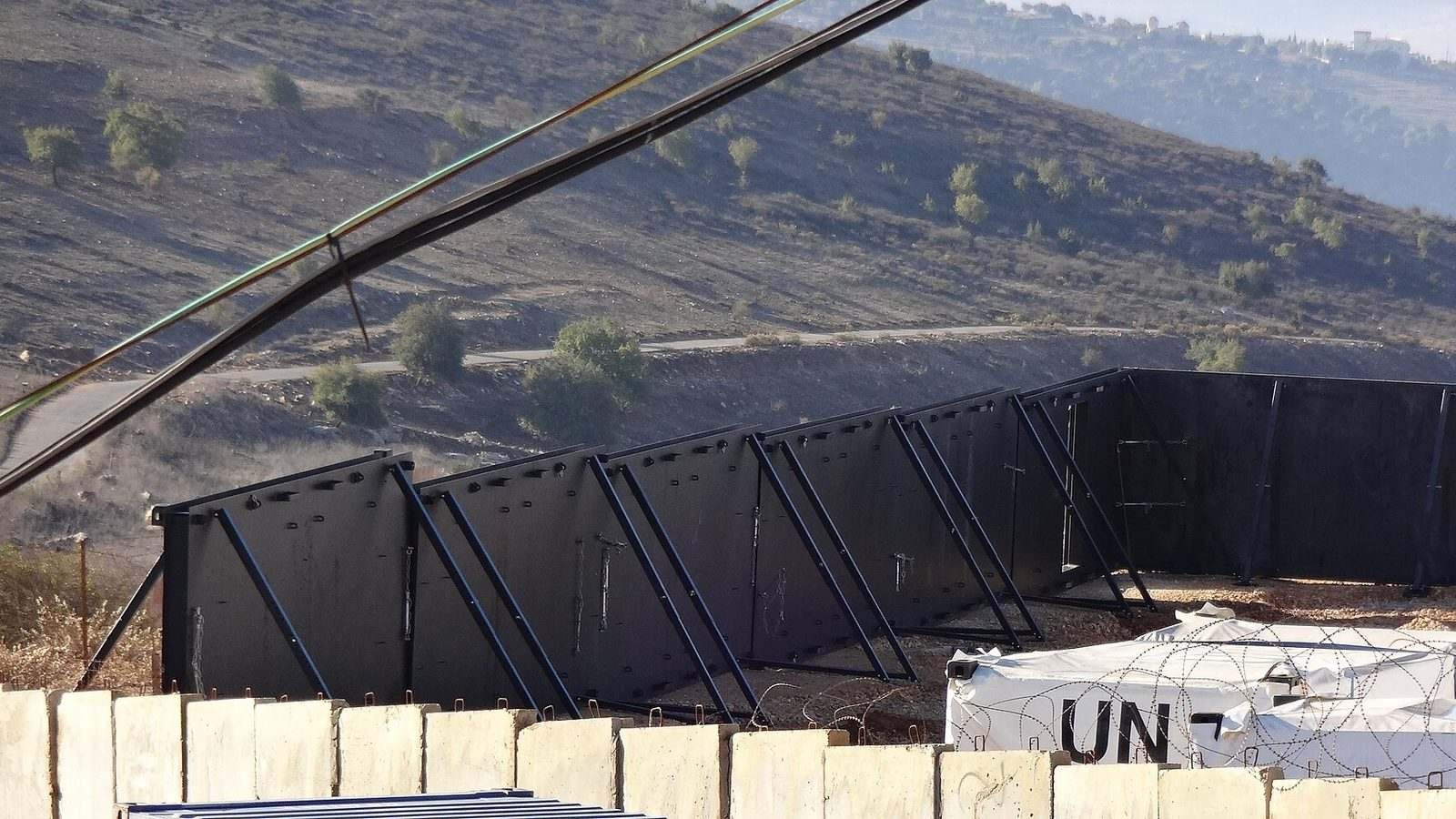
Hezbollah's arsenal represents one of the most dangerous held by any non-state actor, making it a regional threat, and the military infrastructure expanded north of the Litani River under the watch of the Lebanese Army and intelligence agencies. South of the river, the area falls within UNIFIL's mandate under international resolution to monitor and prevent illegal weapons. This raises questions about international peacekeeping effectiveness. Boulos questioned whether UNIFIL was constrained and ineffective or whether some components turned a blind eye to Hezbollah's activities, ultimately attributing responsibility to Lebanon's political establishment for providing cover.
UNIFIL spokesperson Kandice Ardiel acknowledged that peacekeepers had detected and reported suspected tunnel infrastructure before the escalation of conflict in late 2023, but said the force could not access private property without authorization that was not forthcoming. The spokesperson noted that UNIFIL's mandate is to monitor and report violations of Resolution 1701, which it refers to Lebanese authorities and the Security Council. The escalation of violence in southern Lebanon has made monitoring more difficult, Ardiel added.
Since November 27, 2024, UNIFIL peacekeepers have identified more than 400 weapons caches across southern Lebanon and reported them to the Lebanese Army, according to Ardiel. The force supports the army in addressing unauthorized weapons and remains committed to implementing Resolution 1701, which it describes as "the only viable path toward a return to stability for civilians on both sides of the Blue Line." The statement reflects international pressure to restore state authority through a UN-backed framework.
A Lebanese security source told The Beiruter that specific information about tunnel locations and nature remains subject to verification and assessment by relevant authorities. Once tunnels are discovered, competent military and security authorities handle them according to established procedures. The source declined to confirm or deny reports of specific networks, indicating ongoing sensitivity around the discoveries.
The Israeli Defense Force has claimed to have uncovered Hezbollah networks across southern Lebanon, including in Beaufort Ridge, Majdal Zoun, Khiam, Qantara, Rab El Thalathine and Srebbine, containing command centres, weapons caches, drone facilities and living quarters. In August 2025, UNIFIL and the Lebanese Army also reported discovering fortified tunnels near Tayr Harfa, Zibqine and Naqoura with shelters, artillery, rocket launchers, missiles, anti-tank mines and explosives. The pattern of discoveries suggests a network far more extensive than previously acknowledged.
The dismantling of this infrastructure will require more than political declarations. Lebanon has taken steps that were once considered unthinkable, including removing the reference to "armed resistance" from the February 2025 ministerial statement. What remains unclear is whether these moves signal genuine institutional reform or tactical repositioning in a landscape where the state's capacity to enforce its authority has long been contested by an organization that operated, for decades, as a state within the state.