
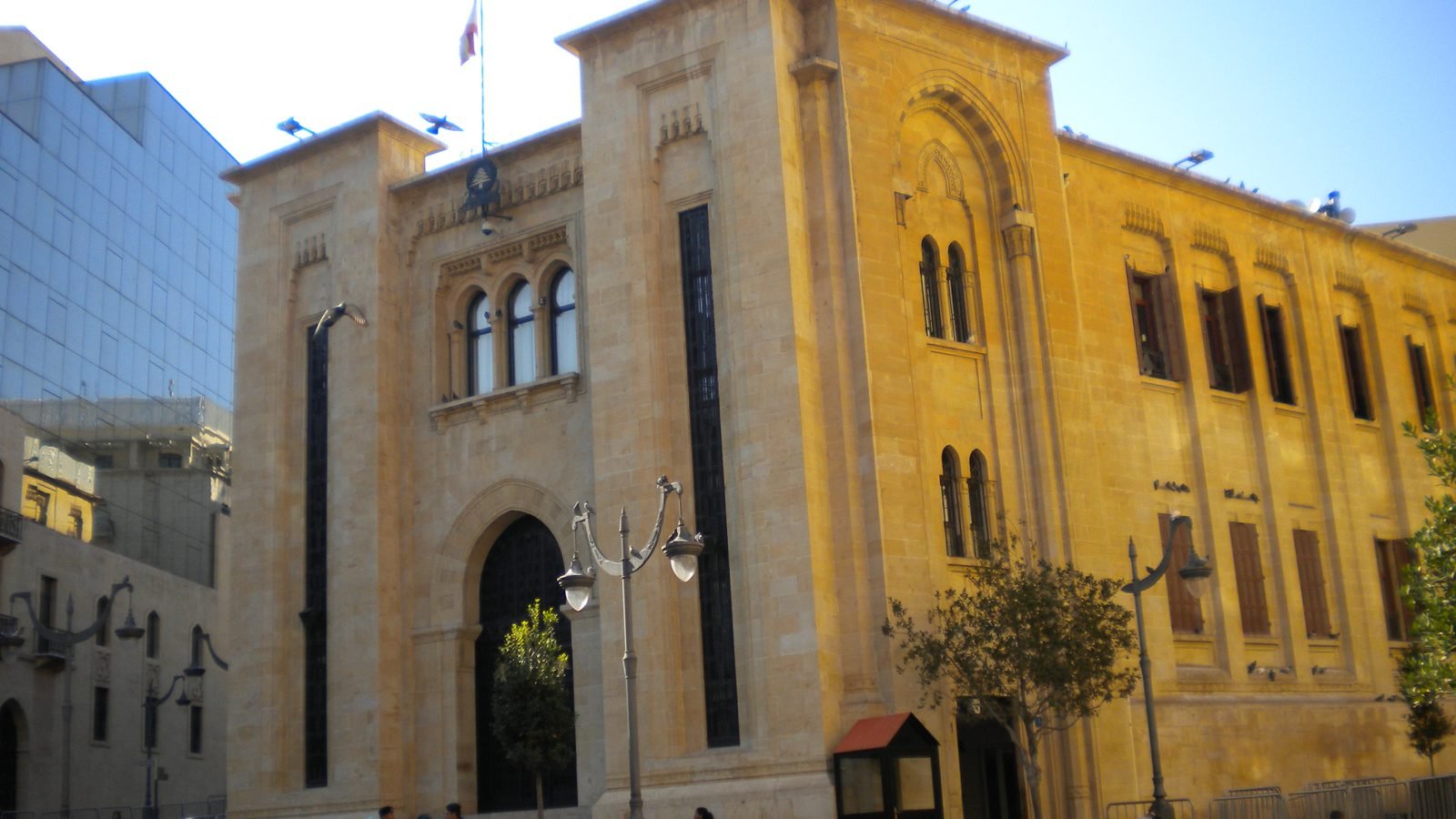
Lebanon's parliament has approved a long-debated general amnesty law that satisfies competing sectarian demands but leaves significant gaps in its application and fails to address root causes of prison overcrowding.
Parliament has passed a general amnesty law designed to ease severe prison overcrowding but that reveals deep sectarian divisions and procedural ambiguities that may shift disputes from the legislature to the courts and security apparatus. The law represents the latest instance of Lebanon using amnesty to settle political scores rather than confront underlying causes of incarceration, according to legal analysts who question whether it will achieve the stated goal of national reconciliation.
The principal justification for the amnesty has been the crisis of prison overcrowding. Prisons operate at roughly 350 percent of capacity, and detainees without trial comprise approximately 83 percent of the total prison population. Lawyer Muhammad Sabluh argues, however, that reducing overcrowding cannot be sufficient on its own, since the prisons will simply refill if the underlying causes persist. He emphasizes the need for the internal security forces to cease arbitrary detention, for prison infrastructure reform, and for court digitization.
Sabluh also contends that the amnesty law has not achieved true national reconciliation because the underlying political conflict remains unresolved. The real solutions require ending excessive pretrial detention, accelerating trials, establishing rehabilitation programmes, and strengthening judicial independence. Without these measures, he says, the law will prove temporary relief rather than lasting change.
The law provoked intense sectarian controversy even before passage. Hezbollah objected to the pardon of those who fled to Israel and the permission for their return. The Free Patriotic Movement rejected the inclusion of those it calls "Islamists" in the amnesty, arguing that this dishonours the memory of slain soldiers of the Lebanese army and their families. Sunni political figures insisted that the law cannot be credible unless it includes Sheikh Ahmad al-Assir, convicted of directing the 2013 battle of Abra in Sidon against the Lebanese army.
The most contentious provision concerns Lebanese who fled to Israel. These individuals departed southern Lebanon for Israel and brought their families with them following the Israeli army's 2000 withdrawal from the south. Most had joined the South Lebanon Army, a militia formed with Israeli support from residents of southern villages and units that had broken away from the Lebanese army in 1976. They have been barred from returning since that time, particularly those holding Israeli passports. The Lebanese Forces party has been the principal advocate for their pardon.
The amnesty does exclude those who "participated in crimes of treason, espionage, and illicit relations with the enemy", particularly those who joined the South Lebanon Army and engaged in combat and military operations, according to lawyer Layal Saqr. However, the law does cover Lebanese born in Israel after their families relocated there in 2000, who grew up there and obtained Israeli citizenship, provided they participated in no hostile acts against Lebanon or the Lebanese state.
Significant ambiguities cloud this provision. Saqr identifies several unresolved questions: how will authorities determine who participated in hostile acts; what of those who later served in the Israeli military; which body has authority to investigate these cases; how are holders of Israeli citizenship treated; and is renouncing Israeli citizenship a precondition for return to Lebanon. These gaps risk moving disputes from parliament into the courts and security agencies, where interpretations and procedures may themselves become contested.
Some Lebanese currently in Israel have commented on the law via social media, with voices among them rejecting it and expressing reluctance to return, saying they lack confidence that Lebanon offers adequate protection or a suitable place to settle. The provision thus solves neither the legal ambiguities nor the practical reservations of those it purports to address.
A second major category covered by the amnesty consists of those the law calls "Islamic detainees", predominantly Lebanese Sunnis alongside Syrians and Palestinians accused or convicted in security-related cases or confrontations with the Lebanese army, or charged with membership in militant organisations such as the Islamic State or Jabhat al-Nusra. This file originated in early 2000 with events in Dinniyeh and has expanded through a series of security incidents, most notably the battles of Nahr al-Bared, the 2013 events in Abra in Sidon, and the clashes in Arsal's outskirts. Sunni political forces have long pressed for this measure.
Families of these detainees have periodically gathered outside Roumieh prison and in public squares, sometimes blocking roads to protest the continued detention of their relatives without trial. Sunni parliamentarians have repeatedly used this file as a tool before legislative elections, and the matter returned to prominence when the government transferred several Syrian prisoners to Syria for completion of their sentences or release. Pressure mounted to include this category in the general amnesty, though with significant exceptions, most notably the case of Ahmad al-Assir.
The first phase of implementation will see the release of 57 prisoners out of roughly 150 who fall into this category, with others gradually freed according to their sentences. Those expected to be released immediately include those who have completed their full sentences or served the greater part of them, including detainees from the Fatah al-Islam affair, both Lebanese and Palestinian. The term "Islamic detainees" is not a legal classification; eligibility for amnesty is determined not by religious affiliation or political designation but by the specific crimes charged to each person, a distinction Saqr emphasised.
The amnesty law does not extend full pardon to those whose files contain accusations or convictions relating to terrorist crimes committed against civilians, military personnel, or members of security forces. This exception has kept Ahmad al-Assir in prison despite calls from Sunni figures for his inclusion. The persistence of such exclusions demonstrates how the law has become a tool for balancing competing sectarian demands rather than a coherent legal instrument.
This is not the first general amnesty Lebanon has passed. The first came in 1991 and covered war crimes from the civil war, beginning a pattern that has since become institutionalised. Trials, acknowledgment, and justice have been displaced by amnesty laws that bury intractable cases. Laws 677 and 678 in July 2005 followed, concerning Samir Geagea and detainees from Dinniyeh and Majdal Anjar. A comprehensive drug-related amnesty was issued in 1997. Human rights advocates have consistently condemned this repetition, arguing that it privileges sectarian settlements over justice.
The fate of the amnesty law now rests with implementation by security agencies and courts interpreting its ambiguous provisions. The gaps identified by legal analysts risk reproducing in practice the very conflicts that parliament attempted to resolve through legislation. Whether the law achieves even its modest goal of temporary relief from overcrowding, much less genuine national reconciliation, will depend on how those agencies apply provisions that parliament left deliberately vague to secure passage.