
A field tour documents ongoing demolition of homes, burning of crops and forests, and removal of ordnance across villages in southern Lebanon occupied since March.
Israeli forces occupying villages across southern Lebanon's border strip are systematically destroying homes, burning agricultural land, and clearing terrain in what witnesses describe as a scorched-earth operation. The destruction, documented across districts of Nabatieh, Marjayoun, Bint Jbeil and Sour, has accelerated since the start of operations on March 2, which led to the displacement of most residents from the border region and extended Israeli control northward across the Litani River. The campaign involves both aerial bombardment with explosive and incendiary munitions and ground forces using Merkava tanks and military vehicles to ignite fires across olive groves, vineyards, forests and other cultivated land.
Teams moving through villages in the districts of Nabatieh and Marjayoun documented ongoing demolition of homes through mining, explosive charges and burning, alongside widespread clearing and burning of agricultural plots. In Yahmer al-Shaqlf, Israeli forces carried out a major detonation using approximately 700 tonnes of explosives, according to statements attributed to Israel. Across the Wadi al-Saluki area, which remains under Israeli control between Shaqra, Miis al-Jabel and Houla, olive groves and cultivated land have been reduced to bare earth with no vegetation remaining.
The Israeli flag remains raised over Doueibeh Castle, positioned between Shaqra, Miis al-Jabel and Houla, despite the absence of Israeli personnel physically stationed at the location. Smoke continued to rise from olive groves in Bani Hayyan as homes in the village underwent demolition. In nearby Talousseh, rubble from destroyed homes surrounds the town square and mosque perimeter.
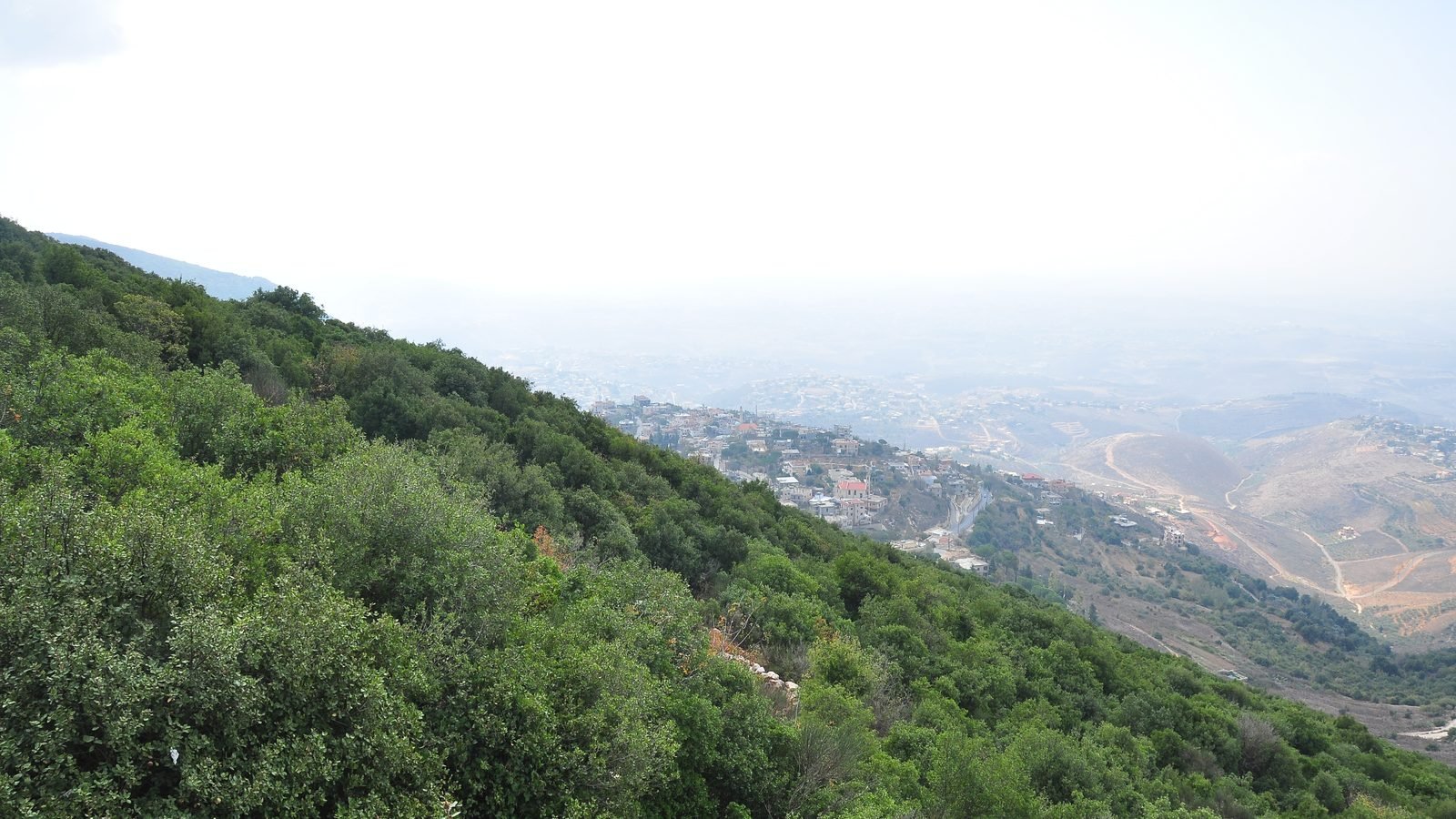
From the vantage point of Majdal Salem, fires were visible ascending from the border villages of Miis al-Jabel and Aitarun. Road access through Wadi al-Saluki between Shaqra, Miis al-Jabel and Houla traverses completely barren terrain following systematic burning of agricultural land. Earthen berms placed by Israeli forces stand opposite Haditha village in Bint Jbeil district, where the Lebanese army maintains its final checkpoint before occupied territory.
In Aita village, flames continued burning through olive orchards, vineyards and carob fields in Haditha village, which lies directly across from the Lebanese military's last access point into the occupied zone. The demolition and burning sequence repeating across Sour district villages, particularly in occupied Majdal Zoun and Saidiyin, follows the forced evacuation of residents from these communities. Saidiyin undergoes daily artillery bombardment and airstrikes by unmanned aircraft.
The operation follows an eighteen-month campaign beginning with the start of operations in support of Gaza in October 2023, continuing through a sixty-day escalation in 2024, and intensifying with operations that began in March of this year. Villages across the border strip and adjacent areas, including Zoueiter al-Sharqiah, Kafartabnit, Arnoun and its historical fortress, have experienced large-scale explosions destroying civilian infrastructure and homes. Israeli forces maintain control across most border villages and have not withdrawn from the line marked as the Yellow Line, according to statements attributing continued presence to demands for Hezbollah weapons removal.
The destruction extends beyond occupied territory into villages that Israel has not withdrawn from, despite their position north of the original border positions. Fires set across forests, olive orchards and cultivation land continue with both incendiary munitions dropped from aircraft and materials applied directly by personnel operating armored vehicles. The Lebanese army maintains checkpoints that block civilian access to affected areas, with military vehicles positioned to prevent entry toward villages under Israeli control or active bombardment.
As operations continue, no timeline for Israeli withdrawal has been announced, and statements from Israeli officials link continued presence to security conditions and weapons removals that Hezbollah has not accepted. The Lebanese government has made no public announcements regarding negotiations for withdrawal or the terms under which forces might leave occupied territory. International mediation efforts, if undertaken, have not been publicly detailed or attributed to specific parties.
The scale and nature of the destruction documented across multiple southern districts represents one of the most extensive demolition campaigns in the region's recent history. Residents displaced from their homes remain unable to return, and infrastructure damage extends across civilian homes, agricultural production capacity and natural forest cover. The ongoing operations leave unresolved fundamental questions about the conditions for ceasefire, the timeline and scope of any Israeli withdrawal, and the status of areas that remain under Israeli control but outside the original border demarcation.