
U.S. general Joseph Clearfield held talks with Lebanese leaders on implementing a border framework agreement with Israel, while Hezbollah Secretary-General Naim Qassem attacked the accord and warned of potential confrontation.
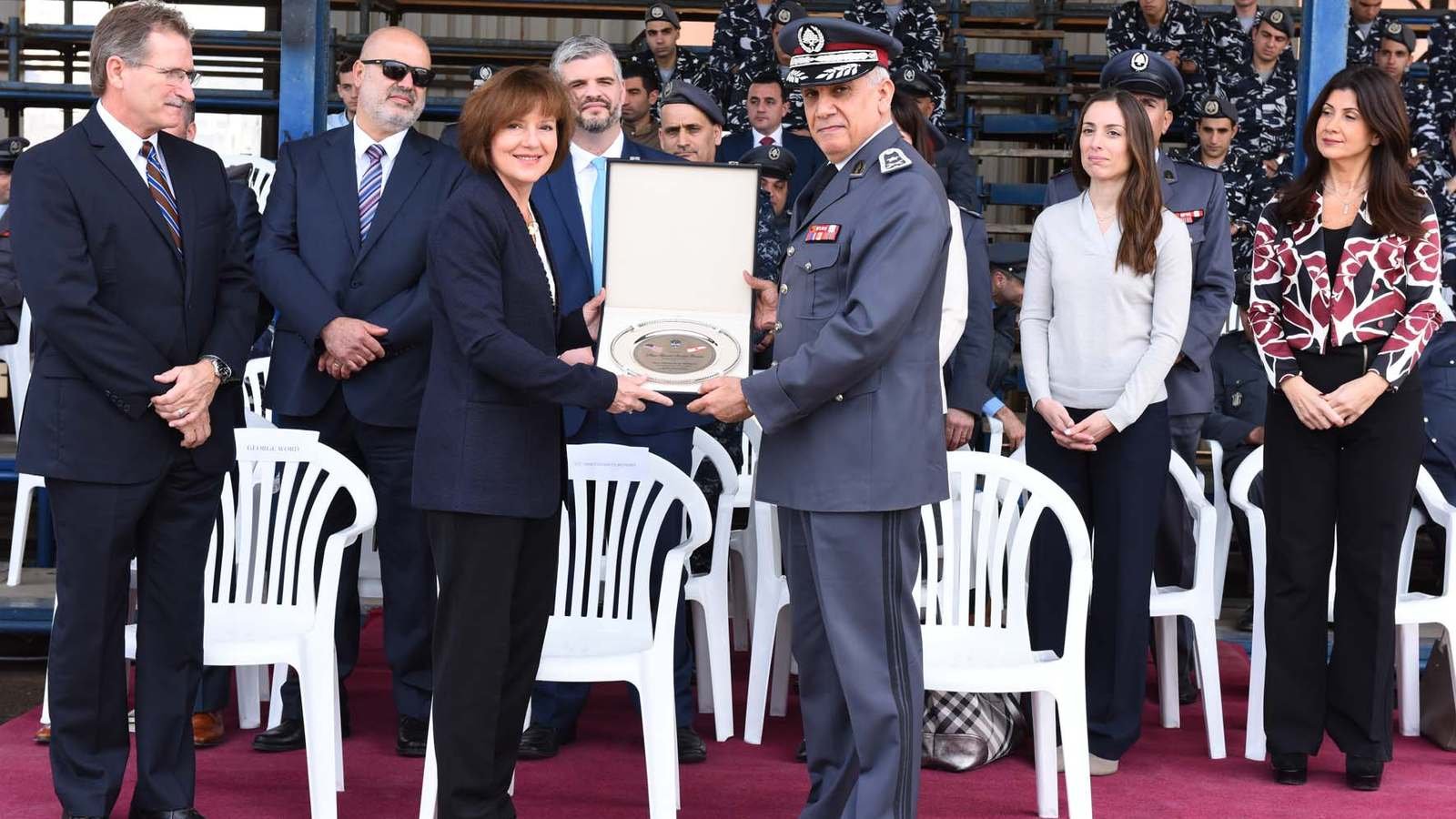
General Joseph Clearfield, who heads the U.S. military coordination group for Lebanon, visited Beirut on Thursday following a trip to Israel to discuss implementing a framework agreement between Lebanon and Israel. He met with Prime Minister Nawaf Salam, who was accompanied by U.S. Ambassador Michel Issa, and discussed the military aspects of the framework and field developments in the south. During the meeting, Salam stressed the need for Israel to halt destruction operations, expand the designated trial zones, establish a clear timeline for Israeli withdrawal, and commit to a specific schedule for implementing the agreement. Clearfield and Issa later met with Parliament Speaker Nabih Berri at Ain al-Tineh.
The general's visit carried significant weight because implementation of any field measures requires both political decision and political cover, military sources said. The talks centred on mechanisms for execution and next steps in the process. Clearfield is expected to meet with Army Commander Rodolphe Haykal after completing his meetings with political leaders, an encounter that could help clarify additional details about implementation procedures and upcoming moves.
Five countries have been proposed to participate in a verification mission to monitor the Lebanese army's work in the trial zones designated for Hezbollah disarmament: Britain, Italy, Switzerland, Canada, and Azerbaijan. The United States itself does not intend to deploy military forces on the ground, instead monitoring the situation closely through forces to be agreed upon for deployment. A Lebanese official expressed confidence that the U.S. position supporting Lebanon in response to statements by Israeli minister Yisrael Katz would accelerate contacts to set a date for the next round of negotiations.
Military sources indicated that progress in the trial zones faces a series of complications, chief among them the continuation of Israeli attacks. The Lebanese army has briefed the American side on this obstacle, noting that progress in the trial zones remains linked to field conditions and the mechanisms for implementing the plan. The shift to new zones remains contingent on resolving several files, including the verification mechanism, participating countries, required technical standards, and complications arising from ongoing Israeli attacks.
Amid these developments, Hezbollah Secretary-General Naim Qassem launched a sharp new attack on the framework agreement and the negotiating process with Israel. In remarks marking what Hezbollah calls the anniversary of the July 2006 victory, Qassem said the framework agreement is not an agreement or a framework but Israeli dictates signed by the Lebanese authorities. He criticized the conduct of Lebanese officials and their approach to developments over the past fifteen months.
Qassem argued that authorities targeted the resistance instead of the aggressor state over that period. He accused the United States of supporting Israel and stated that Israel would not be able to carry out such brutality and destruction without American backing. He leveled harsh criticism at the negotiation option, saying negotiations would yield only shame and disgrace and that authorities must return to their people and acknowledge their failure.
The Hezbollah leader suggested Lebanese authorities were implementing commitments made to the United States upon taking office, even at Lebanon's expense. He reaffirmed Hezbollah's rejection of the current negotiating path by declaring the group has no faith in any negotiations. Qassem also criticized what he described as pressure and surveillance imposed on the Lebanese army, asking how authorities could accept Israeli bombardment of the army and then subject it to a foreign committee that monitors and oversees its work.
Qassem attacked the concept of trial zones that has emerged in the negotiating framework, asking rhetorically what this innovation that officials call trial zones actually represents. In language framed as an appeal to the resistance to restrain their anger, he issued an implicit threat, telling supporters to store their anger for the moment when it could be deployed to achieve objectives and demands, noting that this anger has a time when it can explode and holding those who do not know how to operate and who work against the resistance responsible for the consequences.
Lebanese Forces Party leader Samir Geagea stated that the core of the problem hindering Lebanese-Israeli negotiations lies in non-compliance with what was agreed in 2024 regarding dismantling Hezbollah's military and security apparatus, resulting in loss of credibility for the political authorities who continue betting on time and regional developments to avoid confronting the party. Geagea said the army bears no responsibility in this context but rather the political authorities do. He questioned why Lebanese Forces deputies faced targeting in an amnesty law regarding those deported to Israel, noting they were the only Christian deputies who raised and fought hard for the file, and expressed regret that some were exploiting the blood of army martyrs for partisan political ends, describing this as the most significant betrayal.