
A senior Hezbollah official stated the party will not rule out direct contact with Washington, while Lebanese officials pursue international support and Israel conducts continued military operations in the south.
Mahmoud Qomatti, a member of Hezbollah's political council, adopted a notably flexible tone toward the United States, saying the party will not permanently close the door to direct communication with American officials. The stance comes after Washington reclassified the group as a faction within Iran's Islamic Revolutionary Guards Corps. Qomatti said any decision on engagement would depend on interests and appropriate circumstances.
Qomatti stated that the resistance movement has chosen patience and is giving the political process a chance, aiming for complete liberation and Israeli withdrawal from Lebanese territory. He asserted that the movement remains strong and capable, and that refraining from responding to every attack does not signal weakness or incapacity.
On the Ali al-Tahir position, a strategic location that has become central to the southern conflict, Qomatti said the resistance's current decision is to hold firm while studying all available options. He flatly denied the presence of any Iranian fighters in the resistance's ranks in southern Lebanon.
Regarding financial pressure, Qomatti said sanctions and financial blockade will not push Hezbollah to abandon its resistance project or its people and community. He also stated that Yemen's Ansar Allah have indicated readiness to close the Bab al-Mandab strait if pressure is applied against the resistance and its supporters in Lebanon.
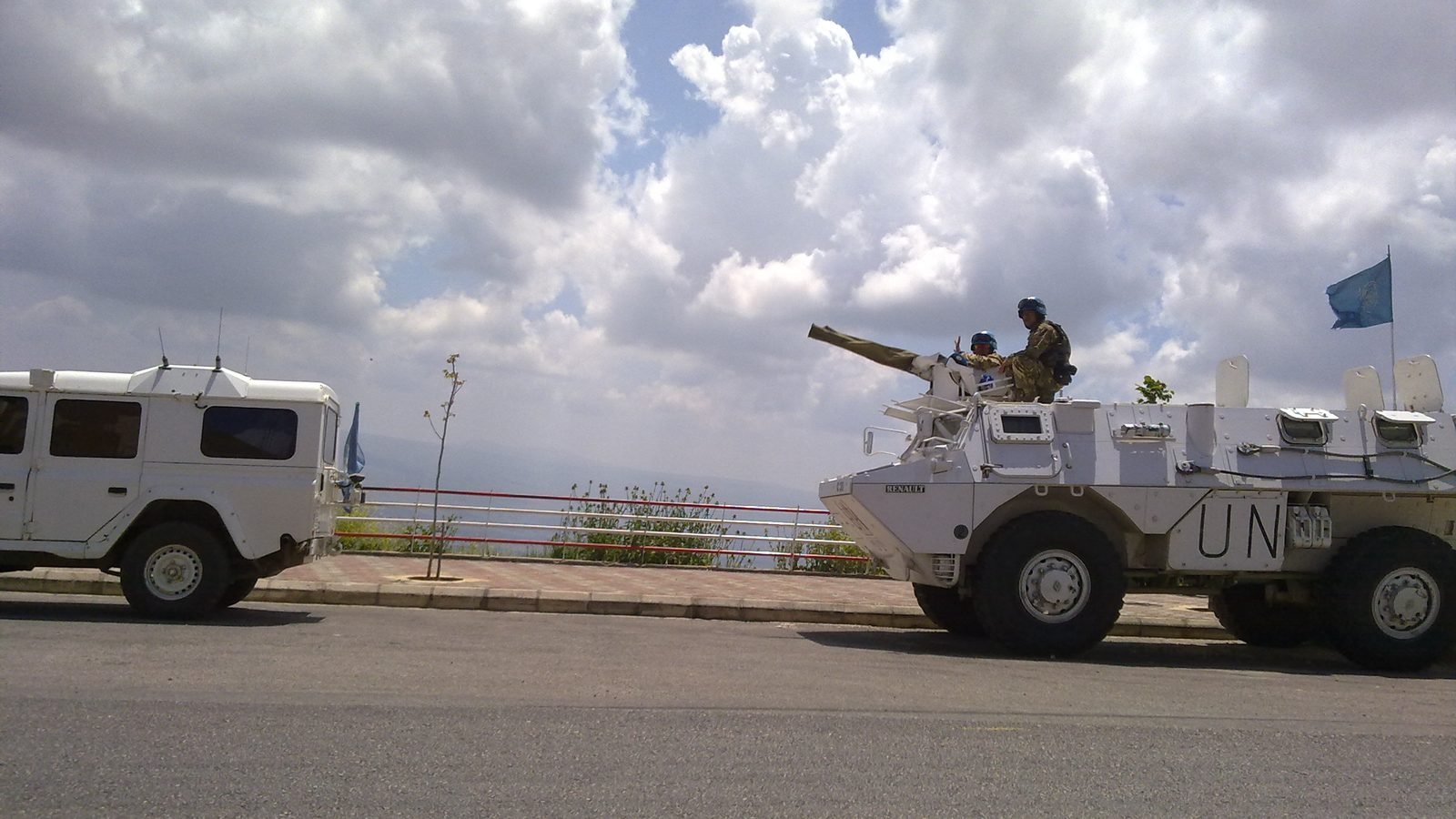
Meanwhile, President Joseph Aoun returned to Beirut after visits to the Vatican and Italy, where he met Pope Francis and Italian President Sergio Mattarella and Prime Minister Giorgia Meloni. Discussions covered bilateral relations and the situation in Lebanon and the region, including preparations for the period after UNIFIL's mandate ends.
Army Commander Rodolphe Haykal is expected to visit Italy early next week with a high-level delegation to discuss verification mechanisms for designated areas and security arrangements following UNIFIL's withdrawal. Italy's potential participation in future operations remains under discussion, with Italian officials seeking clarification on the force's mandate, geographic area of operations and coordination with the Lebanese military.
American sources indicated the United States will not cover the Paris conference in support of the Lebanese military because it was not coordinated with Washington. That conference is scheduled for September 17.
Former Progressive Socialist Party leader Walid Jumblatt wrote on X that talk of defeat and surrender under the banner of exclusive weaponry is spreading, and that mentioning a ceasefire has become forbidden after certain state actors adopted the framework paper lacking any legal basis.
Israeli warplanes conducted two strikes on the Ali al-Tahir heights at the northern edge of Nabatiyeh al-Fawqa. The Israeli military carried out strong explosions in Kafartebbnine, Arnoun and Tallousa, and a major demolition of several homes in the Houshin area at the western edge of Miyes al-Jabel. Israeli artillery targeted edges of Miyes al-Jabel. An Israeli drone dropped explosives near a shepherd in Ghadeer in the Sarbin area of southern Lebanon without reported casualties.
Through the night, Israeli artillery conducted concentrated fire on the outskirts of Doueha Kafar Remman, the area around Tal al-Dabsha and the Ali al-Tahir woods, using phosphorous shells. Nabatiyeh al-Mansouri, the surroundings of Biout al-Siyad and edges of Majdal Zoun experienced heavy Israeli artillery bombardment at dawn.
The Israeli military executed a violent demolition operation in the village of al-Taibe in Marjayoun district in the afternoon, as Israeli forces continued military movements in several southern areas. An Israeli drone dropped explosive containers on the Ali al-Tahir woods area.